


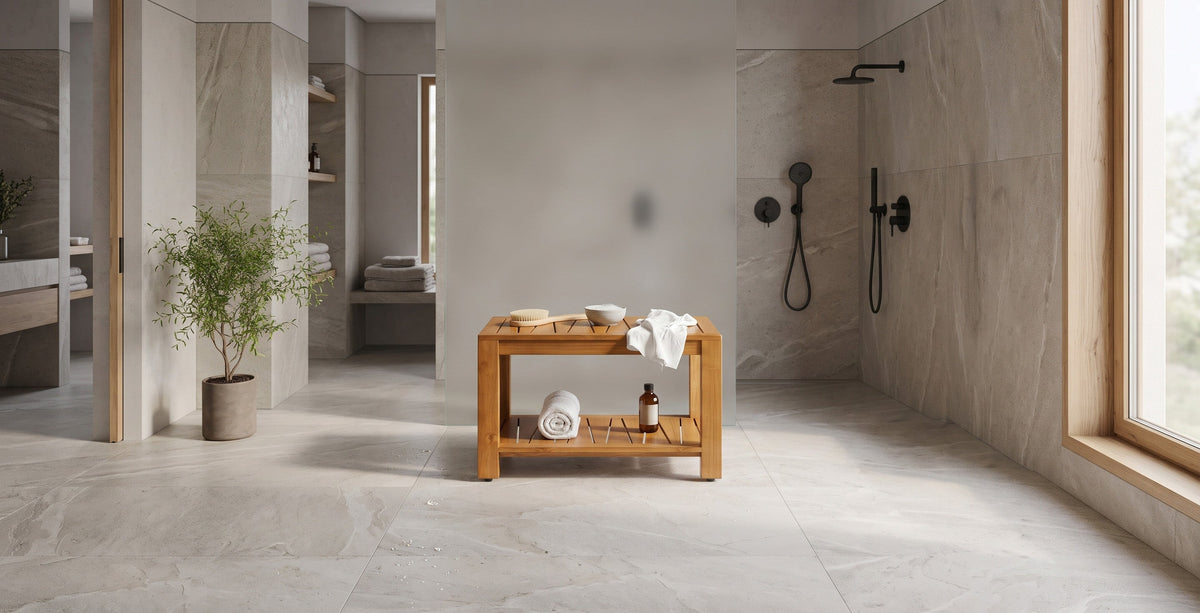
One of the best things about teak is how little it asks of you. Its natural oils help it resist water, mold and rot, which is why it has been used on boats and in saunas for generations. Still, a shower is a tough place for any material: daily water, soap, shampoo and warm, humid air. A few simple habits will keep your teak shower bench clean, steady and good-looking for years.
The short version
- After each use: rinse off soap and let the bench air dry.
- Every few weeks: wash with mild soap and a soft brush.
- Every 2 to 3 months: wipe on a thin coat of teak oil and buff off the excess.
- As needed: lightly sand dark spots on natural teak.
- Never: bleach, harsh chemicals, steel wool or a pressure washer.
Everyday habits
Most problems with a shower bench start with soap residue that sits on the wood. Soap scum holds moisture and gives mildew something to feed on. At the end of your shower, give the seat and shelf a quick rinse with clean water. That one step does more than any cleaner.
Then let the bench dry. Leave the shower door or curtain partly open, run the bathroom fan for 15 to 20 minutes, and avoid draping wet towels over the bench. The slatted seat and shelf are designed to drain, so water should not pool if air can move around them.

Slatted seats like the 30" Freya let water run through so the bench dries quickly.
How to clean a teak shower bench
Every two to four weeks, or whenever the wood looks dull or feels slick, give it a proper wash:
- Mix a few drops of mild dish soap in a bucket of warm water.
- Scrub the seat, shelf and legs with a soft-bristle brush, moving along the grain.
- Pay attention to the gaps between slats and the joints, where residue collects.
- Rinse well with clean water.
- Let the bench dry completely, ideally with good airflow.
Skip bleach, ammonia, abrasive powders and steel wool. They can strip the wood's natural oils, raise the grain and leave a rough, blotchy surface. A pressure washer is too aggressive for the same reason.
Removing mildew and dark spots
Small dark spots usually mean mildew growing on soap residue at the surface, not damage to the wood. To treat them:
- Scrub with a mix of one part white vinegar to four parts warm water and a soft brush, then rinse well.
- For stubborn spots on natural teak, let the bench dry and lightly sand the area with fine sandpaper (220 grit), along the grain. Teak is solid all the way through, so a light sanding reveals fresh wood underneath.
- Afterwards, improve ventilation and rinse the bench after each use so spots do not return.
Oiling your teak shower bench
For the best look and protection, we recommend oiling your bench every 2 to 3 months. Teak oil replenishes the natural oils that daily water and soap slowly wash out, keeps the wood's color rich, and helps water bead on the surface.
- Clean the bench as described above and let it dry completely, ideally for a full day.
- Apply a thin, even coat of teak oil with a soft cloth, working along the grain.
- Wait about 15 minutes, then wipe off all the excess oil. A thin coat that has soaked in is better than a thick one sitting on top.
- Let the bench cure for 24 hours before using it in the shower, so the seat is not slippery.

Regular oiling keeps natural teak like the Hermod 21" bench in its warm honey tone.
Why teak turns gray, and how to restore it
Over time, natural teak exposed to water and light slowly softens to a silver-gray tone, especially if it is not oiled. That is a surface change only; the wood underneath is just as strong. To bring back the original warm color, clean the bench, let it dry, sand lightly with 220-grit paper and finish with a thin coat of teak oil. Regular oiling every 2 to 3 months keeps the color from fading again.
Caring for rustic gray teak
Our rustic gray benches, such as the Lavici, Luni, Ricina and Cosima, have a hand-applied gray finish over solid teak. Care for them the same way as natural teak: rinse after use, wash with mild soap and a soft brush, and oil every 2 to 3 months. The only difference: do not sand a rustic gray bench, since sanding will remove the gray finish.

Rustic gray benches like the Lavici get the same oiling routine; just skip the sandpaper.
Check the feet and hardware
Every few months, look at the adjustable rubber feet. Make sure the bench still sits level without rocking on your shower floor, and replace any foot that is cracked or worn. Check that no joints or hardware have loosened. A stable bench is a safe bench.
Using teak outdoors or by the pool
Teak benches handle patios and pool decks well. Outdoors, sun speeds up the silver-gray patina, and rain does the rinsing for you. Brush off leaves and pollen, wash with mild soap a few times a season, oil every 2 to 3 months to keep the color, and store the bench somewhere dry over winter if you can.
Frequently asked questions
Can a teak shower bench get moldy?
Teak resists mold well, but mildew can grow on soap residue left on the surface. Rinsing after use and keeping the bathroom ventilated prevents most spots, and any that appear can be scrubbed or lightly sanded away on natural teak.
How often should I oil my teak bench?
Every 2 to 3 months, for both natural and rustic gray teak. Apply a thin coat, wipe off the excess, and let it cure for 24 hours before the next shower.
Can I use bleach on teak?
No. Bleach and harsh cleaners can damage the wood's natural oils and leave blotchy color. Use mild soap, or diluted white vinegar for mildew.
Is it normal for teak to change color?
Yes. Teak is a natural wood, and its color gently evolves with water and light. That is part of its character, not a defect, and regular oiling keeps the color rich longer.
Looking for a bench that is easy to live with? Every TeakCraft teak shower bench is made from solid Indonesian teak and arrives fully assembled. Questions about care? Call us at +1 877-661-9293.
Share:
Teak vs. Bamboo Shower Stool: Which Holds Up Better in a Wet Shower?
Teak Gift Guide 2026: Thoughtful Gifts for the Bathroom, Patio & Home