


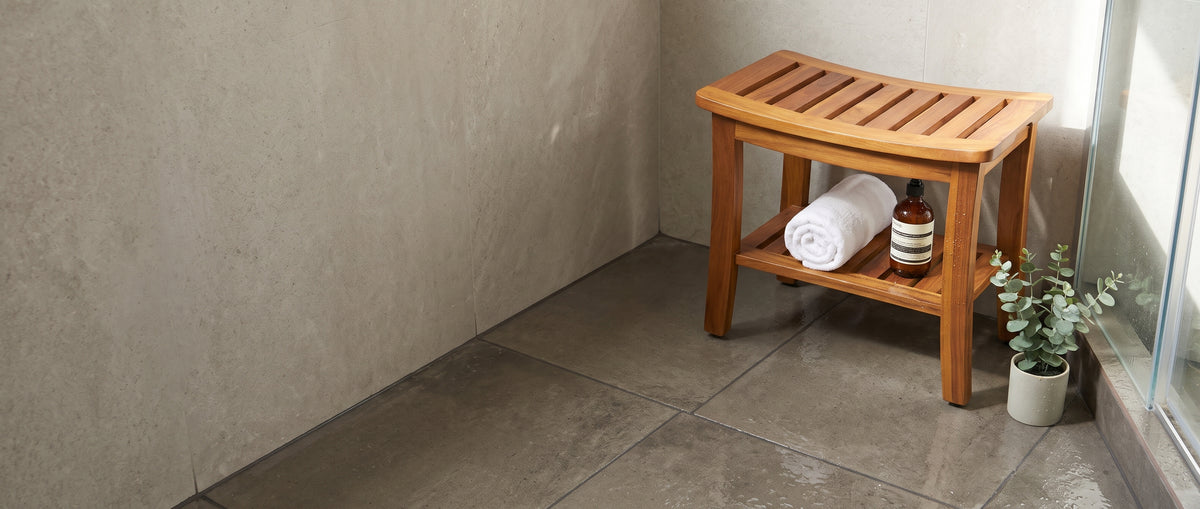
A shower seat looks like a small purchase until you use one every day. The wrong one wobbles on wet tile, cracks after a winter, or makes a beautiful bathroom look like a hospital room. The right one disappears into your routine: you sit, you shave, you set down a bottle, and you never think about it again.
Most shower benches sold in the US are made from one of three materials: molded plastic, aluminum (usually with a plastic seat), or solid wood such as teak. Each has a real place. This guide explains how they compare on stability, comfort, water resistance, cleaning, appearance, price and lifespan, so you can choose the one that fits your shower and the person using it.
The quick answer
- Choose plastic if you need the lowest price, the lightest weight, or a temporary seat you can toss in a suitcase or replace often.
- Choose aluminum if you need medical-style features such as height-adjustable legs, a backrest, arms or a transfer design, and appearance matters less than adjustability.
- Choose teak if you want a solid, stable bench that resists water, looks like furniture rather than equipment, and can last for years with simple rinsing and occasional care. A teak shower bench costs more up front, but it is the only one of the three that also works as a bathroom, entryway or patio bench.
If you are buying for someone with mobility or balance concerns, the material matters less than the fit: seat height, width, weight rating, leg grip and whether the person needs a backrest or arms. We cover that in the decision guide below.
Teak vs plastic vs aluminum at a glance
| Factor | Plastic | Aluminum frame | Solid teak |
|---|---|---|---|
| Typical look | Utility, clinical | Medical equipment | Spa or furniture |
| Weight of the bench | Very light | Light | Heavier, more planted |
| Stability on wet tile | Depends on feet; light stools can slide | Rubber-tipped legs; often adjustable | Heavier frame; rubber feet on many models |
| Water resistance | Does not absorb water | Frame resists rust; seat is usually plastic | Natural oils help it resist water and decay; it is not waterproof |
| Comfort | Hard, sometimes textured | Hard plastic seat, sometimes with drain holes | Slatted wood, slightly warmer to the touch |
| Adjustable height | Some models | Most models | Usually fixed height |
| Cleaning | Wipe down; scrubbing can scratch | Wipe down; check joints and pins | Rinse after use, wash with mild soap every few weeks |
| Typical lifespan | Short to medium; plastic can become brittle | Medium; depends on hardware and seat | Long with care; teak heartwood is rated very durable |
| Use outside the shower | Limited | Limited | Bathroom, bedroom, entryway, patio |
| Price | Lowest | Low to moderate | Highest |
The table simplifies real differences between brands. A well-made plastic bench can outlast a poorly made teak one, and a cheap teak-look bench made from a different wood will not behave like solid teak. Read the product details, not just the material name.
What actually matters in a shower bench
Before comparing materials, it helps to know what a shower seat has to do. A bench in the shower faces daily water, soap, shampoo, body oils and warm humid air. It has to hold an adult safely on a slippery floor, and it has to be easy enough to clean that you will actually do it.
That gives you six questions to ask about any bench, whatever it is made from:
- Will it stay put? Look for rubber or non-slip feet, a stable stance and a weight rating that leaves a margin above the heaviest user.
- Is it the right height? Most people are comfortable when their thighs are roughly level and their feet rest flat on the floor.
- Will water drain off it? Slats or drain holes stop water from pooling where mildew can grow.
- Can you clean every surface? Hidden joints, hollow tubes and tight crevices collect residue.
- Will it last in your bathroom? Think about ventilation, hard water and how often the shower runs.
- Will you like looking at it? A bench that clashes with your bathroom often ends up stored in a closet.
Keep these in mind as we look at each material.
Teak shower benches: the furniture-grade option
Teak (Tectona grandis) has been used for boat decks, outdoor furniture and saunas for generations because its heartwood naturally resists decay and moisture. Forestry agencies rate teak heartwood among the most durable timbers. The Queensland government's timber guide, for example, gives teak an above-ground durability rating of Class 1, its highest class. Laboratory testing reported by researchers at the Swedish University of Agricultural Sciences found outer teak heartwood performed as very durable against decay fungi, while sapwood was much less durable.
That last point matters when shopping. The durability people associate with teak comes from the heartwood and its natural oils and extractives. A bench made from solid teak behaves very differently from one made of a cheaper wood with a teak-colored stain.
Where teak wins
- Stability. A solid wood frame is heavier than plastic or a hollow aluminum tube, so it is less likely to shift when you sit down or stand up. Many TeakCraft benches add non-slip rubber feet that grip wet tile, and some models have adjustable leveling feet for sloped shower floors.
- Strength. Most TeakCraft shower benches are rated to hold 350 pounds, and the heavy-duty Elera and Danica models are rated to 400 pounds, according to their product pages.
- Comfort. Wood slats feel warmer than plastic, and a slightly curved seat, like the one on the 30-inch Freya, can be more comfortable for longer sits.
- Drainage. Slatted seats and shelves let water run straight through, so the bench dries faster between showers.
- Looks and versatility. Teak looks like furniture. When you remodel or move, the same bench can serve as an entryway seat for putting on shoes, a plant stand, a bedside bench or a patio seat.
- Lifespan. Solid teak heartwood is naturally durable, and a bench that is rinsed and allowed to dry can stay in service for many years. No wood is indestructible, so we do not promise a specific number of years.
Where teak asks more of you
- Price. Solid teak costs more than plastic or aluminum. You are paying for a dense hardwood and hand assembly.
- Simple care. Teak needs a quick rinse after use and a mild-soap wash every few weeks. TeakCraft recommends a thin coat of teak oil every two to three months to keep the color rich. Our full guide to cleaning a teak shower bench walks through each step.
- Color change. Natural teak gradually softens toward silver-gray with water and light. That is a surface change, not damage, and it can be slowed with oil or embraced as a patina.
- Fixed height. Most teak benches have a set height, so measure before you buy.
Best for: everyday shower seating, walk-in and spa-style showers, households that want one bench to last, and anyone who dislikes the clinical look of plastic.
Plastic shower benches and stools: the budget option
Plastic shower seats are usually molded from polyethylene or polypropylene. They are the cheapest and lightest option, and they are everywhere: pharmacies, big-box stores and online marketplaces.
Where plastic wins
- Price. Plastic stools are the least expensive way to add a seat to a shower.
- Weight. They are easy to lift, move, hang or pack for travel.
- No absorption. Plastic itself does not soak up water, so it does not swell or rot.
- Easy replacement. When a plastic stool wears out, it is cheap to replace.
Where plastic falls short
- Stability. A very light stool can slide or tip on wet tile if its feet are hard or worn. Always check the feet and the weight rating.
- Brittleness and fading. Over time, many plastics can become brittle, scratched or discolored, especially near heat or sunlight. Hairline cracks are a reason to replace the seat right away.
- Hidden grime. Textured surfaces, hollow legs and drain holes trap soap scum and mildew. Scrubbing can scratch the surface, which gives grime even more places to hold on.
- Look and feel. Plastic is functional but rarely beautiful. It also feels cold and hard.
- Waste. Cheap stools tend to be replaced rather than repaired.
Best for: short-term needs, travel, rentals, dorms, recovery after a procedure when a seat is needed only for a few weeks, and very tight budgets.
TeakCraft does not sell plastic benches. We include them here because they are the most common alternative, and for some situations they are the sensible choice.
Aluminum shower benches and chairs: the adjustable option
Most "aluminum" shower benches are really hybrids: an aluminum frame with a molded plastic seat, sometimes with a backrest and arms. Aluminum is popular for bath safety equipment because it is light and naturally forms a thin oxide layer that helps it resist rust.
Where aluminum wins
- Adjustable height. Push-pin legs let you raise or lower the seat, often in one-inch steps. That is useful when one bench must serve people of different heights or when a clinician has recommended a specific seat height.
- Medical features. Aluminum chairs commonly offer backrests, padded arms, cut-out seats and tub-transfer designs that extend over the side of a bathtub.
- Light weight. The frame is easy to carry and fold.
- Corrosion resistance. Aluminum does not rust the way plain steel does, although fittings, rivets and pins made from other metals can still corrode.
Where aluminum falls short
- The seat is still plastic. Most of what you touch is a plastic seat, with the same scratching, staining and grime issues as a plastic stool.
- Moving parts. Push pins, rivets and leg extensions can loosen, rattle or seize over time. They need checking.
- Hidden water. Hollow tubes can hold water and residue where you cannot see or clean it.
- Clinical look. These benches look like what they are: medical equipment. For some households that is fine. For others, it makes the bathroom feel like a care facility.
Best for: users who need adjustable height, a backrest or arms; tub-transfer situations; and short-term rehabilitation when a therapist recommends a specific chair.
If you are choosing for an older adult, start with the person's needs rather than the material. Our guide to shower benches for seniors covers seat height, width and safety features in detail. If a doctor, physical therapist or occupational therapist has recommended a specific type of chair, follow that advice.
Head-to-head: how the three compare on what matters
Stability and safety
Safety comes from a stable base, grippy feet and a weight rating with margin to spare. A light plastic stool is the most likely to slide if its feet are hard. Aluminum benches usually have rubber leg tips, and good ones are stable, but the tips wear and should be replaced when they harden or split. A solid teak bench is heavier and sits lower to the floor, which many people find reassuring. On sloped floors, look for adjustable leveling feet so the bench does not rock.
Whichever material you choose, check the bench before each use for wobbling, cracks or loose parts, and stop using it if anything feels unsteady.
Water, mold and mildew
Plastic and aluminum do not absorb water, which sounds like an advantage. In practice, mildew grows on the soap film that coats any surface in a humid bathroom, including plastic. The US Environmental Protection Agency puts it simply: the key to mold control is moisture control. A bench that drains well and dries quickly is easier to keep clean than one that holds water in crevices or hollow tubes.
Teak is not waterproof, and no wood is. Its dense structure and natural oils help it resist water and decay, and slatted designs dry quickly when the bathroom is ventilated. Rinsing soap off after each shower prevents most mildew spots on any material.
Comfort
Plastic and aluminum seats are hard, and some are textured or perforated. Wood slats feel warmer and less slippery under wet skin. If you sit for longer, such as while shaving your legs or washing your hair, a wider seat makes a noticeable difference. A 24- or 30-inch teak bench gives you room to sit and set a bottle beside you.
Cleaning and upkeep
| Task | Plastic | Aluminum | Teak |
|---|---|---|---|
| After each shower | Rinse | Rinse | Rinse and let air dry |
| Every few weeks | Scrub with mild cleaner | Scrub seat; check pins and tips | Wash with mild soap and a soft brush |
| Every few months | Check for cracks | Check legs, pins and rubber tips | Optional thin coat of teak oil; check feet |
| Avoid | Abrasive pads that scratch | Harsh chemicals on fittings | Bleach, steel wool, pressure washers |
Teak's routine is not harder than the others; it is just different. The step people skip on every material is the rinse, and that is the one that matters most.
Appearance
This is where teak separates itself. Plastic and aluminum benches are designed to be functional. A teak bench is designed to look like it belongs. TeakCraft offers natural teak, which has a warm honey tone, and a hand-applied rustic gray finish over solid teak for cooler, modern bathrooms.
Cost over time
Plastic is cheapest to buy and often cheapest to replace. If you replace a plastic stool every year or two, the total cost over several years can approach the price of a solid teak bench that is still going. Aluminum sits in the middle. Teak costs the most up front and makes the most sense when you plan to keep the bench for years.
Which shower bench should you choose? A decision guide
Answer these questions in order.
- Has a clinician recommended a specific type of chair? If yes, follow that recommendation. Adjustable aluminum chairs with backrests or arms are often what therapists suggest for transfers or limited balance.
- Is this temporary? For a few weeks of recovery, a vacation rental or a dorm, plastic is practical and inexpensive.
- Do several people of very different heights need to use it? Adjustable legs on an aluminum bench may help. Otherwise, measure the main user and pick a fixed-height bench that fits. Our guide to shower bench height and size shows how to measure.
- Is your shower small or oddly shaped? A corner shower bench fits into an unused corner and leaves the floor open. If you are unsure whether you need a corner or straight design, read our corner vs straight shower bench comparison.
- Do you want a bench that looks good and lasts? Choose solid teak. Pick the width that fits your shower, decide between natural and rustic gray, and check the weight rating.
Still comparing models? Our guide to choosing the best shower bench explains what separates a quality teak bench from a lookalike.
Popular TeakCraft benches by situation
- Small or standard showers: the 21-inch Hermod natural teak shower bench is compact, fully assembled and rated to 350 pounds.
- Walk-in showers that need extra room: the 30-inch Freya teak shower bench has a curved seat and a lower shelf for bottles.
- Heavy-duty use: the 24-inch Elera rustic gray bench is rated to 400 pounds and has adjustable non-slip leveling feet.
Real-life scenarios: which material fits?
Specs are useful, but most people decide by picturing their own bathroom. Here are six common situations and the material that usually fits best.
The first apartment with a shower-tub combo. Space is tight, the budget is modest and you may move within a year or two. A compact plastic stool will do the job, but a 21-inch teak bench is worth considering if you want something that moves with you and doubles as an entryway seat in your next place. Measure the tub floor first; many tubs are narrower at the base than at the rim.
The family bathroom shared by adults and kids. Several people use the shower each day, so the bench gets wet often and rarely has long to dry. Stability matters more than anything here, because children climb. A heavier teak bench with non-slip feet stays put better than a light stool. Teach everyone to rinse it and leave the door open after the last shower of the day.
The primary-bath remodel. You have invested in tile, glass and fixtures, and the bench is part of the design. Teak is the natural choice: it looks like furniture, comes in warm natural or cool rustic gray tones, and a 30-inch model gives you room to sit comfortably. Plan where it will sit before the glass goes in so you leave space for it out of the main spray.
Short-term recovery after surgery. You need a seat for a few weeks and your care team may have specific advice. Follow it. If they recommend an adjustable chair with a backrest or arms, an aluminum model is usually the practical option. If they simply recommend a stable seat at a certain height, measure and compare that height with fixed-height teak benches as well.
Aging in place. You want a long-term seat that is safe and does not make the bathroom feel clinical. Many households pair a stable teak bench with professionally installed grab bars. Choose a seat height that lets the user stand up without strain, a width that fits the shower comfortably, and a weight rating with plenty of margin. Our seniors guide walks through those measurements.
The outdoor shower or pool deck. Sun, rain and chlorine are hard on plastic, which can fade and become brittle outdoors. Teak has a long track record outdoors and will weather to silver-gray if left unoiled. Rinse it with fresh water after pool use.
Questions to ask before you buy any shower bench
Whatever material you lean toward, these questions help you compare listings fairly.
- What exactly is it made of? For plastic, which type? For aluminum, what is the seat made of? For wood, is it solid teak or a teak-colored finish on another wood?
- What is the weight rating, and is it for sitting? Ratings describe seated use. No shower bench is designed for standing on.
- What are the exact dimensions? Width, depth and seat height all matter. Compare them with measurements from your own shower.
- What are the feet like? Rubber, non-slip and ideally adjustable feet make the biggest difference on wet tile and sloped floors.
- How does water drain? Look for slats or drain holes, and for designs without hidden pockets that hold water.
- Does it need assembly? A fully assembled bench avoids joints that were never fully tightened at home.
- What does care involve? A seller should tell you how to clean it and what to avoid.
- Can you reach the seller? A phone number, clear return policy and real product photos are good signs.
Setting up a new bench safely
Once your bench arrives, a few minutes of setup makes it safer and helps it last.
- Check it over. Inspect the frame, joints and feet before the first use. Make sure nothing is loose or cracked.
- Find the right spot. Ideally, place the bench out of the direct spray, on a flat area of the floor, away from the drain so water can flow freely.
- Level it. Press down on each corner. If the bench rocks, adjust the feet or move it slightly until it sits firmly.
- Test it gently. Sit down slowly the first time and shift your weight to be sure it is steady.
- Leave room to move. Make sure you can still step in and out of the shower and turn around without bumping the bench.
- Start a rinse habit from day one. A ten-second rinse at the end of each shower keeps any material cleaner for longer.
For teak specifically, you do not need to oil a new bench before using it. Many owners give it a first thin coat of teak oil after a few months, following TeakCraft's care guide.
What about sustainability?
Environmental impact is hard to compare across materials, and simple answers are often wrong. A few points are worth knowing.
- Plastic is made from petroleum-based resins, and cheap stools are often replaced rather than repaired. Some are recyclable where local programs accept them.
- Aluminum takes significant energy to produce from ore but is widely recyclable. Mixed aluminum-and-plastic benches can be harder to recycle.
- Teak is a natural material. Much of the teak sold today is grown on plantations, and sourcing practices vary. Look for clear information about where the wood comes from and whether it is legally sourced. Several TeakCraft benches, including the Freya, are described on their product pages as SVLK-certified legal Indonesian teak.
Often the most sustainable choice is the one you will keep the longest. A bench you like looking at, that stays stable and that you can maintain, is less likely to end up in a landfill.
A quick cost comparison over five years
Prices vary widely, so this is an illustration rather than a quote. Imagine a household that keeps a shower seat for five years.
| Scenario | Up-front cost | Replacements | What you end up with |
|---|---|---|---|
| Budget plastic stool, replaced when it cracks or stains | Lowest | Possibly one or more | A functional seat, replaced as needed |
| Mid-range aluminum bench | Low to moderate | Possibly feet or tips | An adjustable seat with a clinical look |
| Solid teak bench, rinsed and occasionally oiled | Highest | Usually none in that period with good care | A furniture-grade bench that can move to a patio or entryway later |
The point is not that teak always costs less over time. It is that the cheapest bench to buy is not always the cheapest to own, and that how long you plan to keep it should shape your choice.
Frequently asked questions
Is a teak shower bench better than plastic?
For long-term everyday use, many people prefer teak because it is heavier, more stable, more comfortable and better looking. Plastic is better when price, low weight or short-term use matters most.
Is teak safe to use in a shower?
Solid teak is widely used in showers and saunas because it resists water and decay. Safety depends on the specific bench: check its weight rating, feet and stability, and keep it clean so soap film does not make the slats slick.
Is a teak bench waterproof?
No wood is fully waterproof. Teak is naturally water-resistant, which is why it performs well in wet rooms. Our guide to whether a waterproof shower bench exists explains the difference between water-resistant and waterproof.
Do aluminum shower chairs rust?
Aluminum itself resists rust, but screws, pins and rivets made from other metals can corrode. Inspect the fittings regularly.
How long does a plastic shower stool last?
It depends on the plastic, the design and how it is used. Replace any plastic seat that develops cracks, flexes more than it used to, or becomes brittle.
Does teak get moldy?
Teak resists mold well, but mildew can grow on soap residue left on any surface. Rinsing after use and running the bathroom fan prevents most spots.
The bottom line
There is no single best material for every shower. Plastic is the budget and travel pick. Aluminum is the adjustable, medical-style pick. Solid teak is the pick for people who want a stable, comfortable bench that resists water, looks like furniture and can serve them for years with a simple rinse-and-dry habit.
If teak sounds like the right fit, browse the TeakCraft teak wood shower bench collection. Every bench is made from solid Indonesian teak and arrives fully assembled. Have a question about sizing or care? Call us at +1 877-661-9293.
Share:
Teak Gift Guide 2026: Thoughtful Gifts for the Bathroom, Patio & Home
How Long Does a Teak Shower Bench Last Inside a Shower?